We’ve been around for a while…
Rodeo is a deep-rooted tradition for the Cattle Capital of North Dakota. The Towner Rodeo Association was established in 1960 and has been consistently hosting the annual July 4th Towner Rodeo for 66 years.
The Towner Rodeo and Parade is a big part of the celebrations held in the Towner and surrounding communities. For the families home for school reunions, family gatherings, local residents or tourists traveling through the area, the Towner 3rd & 4th rodeo and parade have become a staple. The rodeo heritage, the small-town friendly atmosphere, the cowboy persona and country wholesome life has everyone appreciating the lifestyle we have in North Dakota.
Who We Are
-
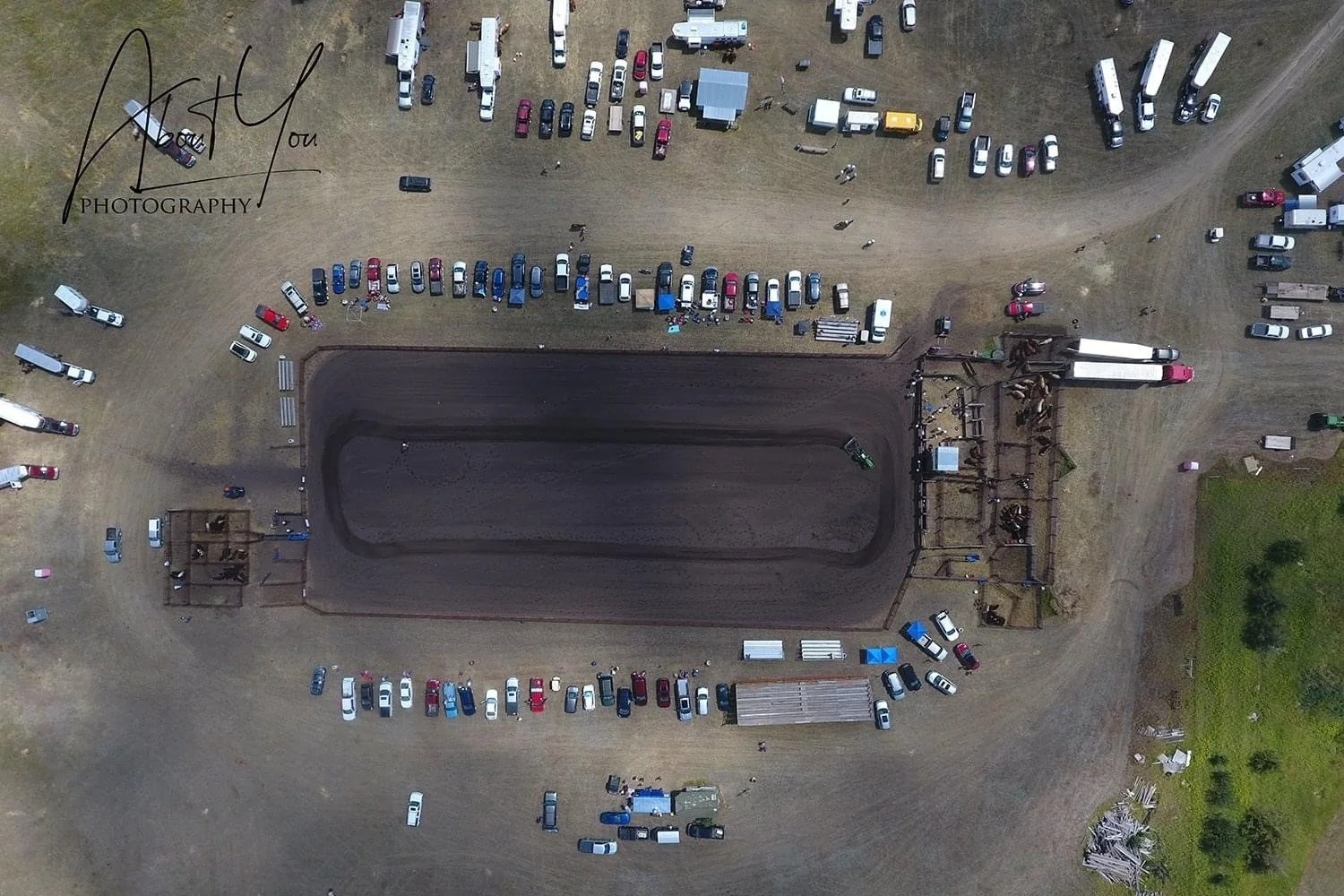
The Towner arena is known as one of the largest arenas in the state even though the size has been reduced twice through the years.
In 1951, fifty-five local ranchers and businessmen each contributed $25 to fund the start of the arena and chutes. It was built at a cost of $3,000 in the early 1950s with volunteer labor. In 1966, two more of the old wooden chutes were added to the four that they had been using. The original grounds were estimated at 600 feet long. In 1968, the arena was shortened and narrowed to measure a length of 485 feet, with the south end measuring 190 feet across and the north end 215 feet across in a “lightbulb” shape.
In 2017, the arena fence was replaced from the old mesh wire to a permanent steel arena through donations from families who sponsored an arena panel to honor their family. The arena was again shortened to 367 feet in length and 150 feet wide. Between 2016 and 2021 upgrades were made to the back pens, corrals, chutes, and roping boxes.
Regarding the actual ground in the arena, according to an article from the June 28, 1983 Towner newspaper, The Mouse River Farmers Press, Raymond “Shorty” Thorson stated, “some rain before the rodeo wouldn’t matter. This rodeo ground is unique in a way. It’s located right in the sand country. It could rain an inch right before the grand entry and they could rodeo. It would be just perfect because it soaks right into the sand.” “We’re probably one of the only rodeo grounds in the state that we water down just before the rodeo starts. We put several thousand gallons of water on to eliminate the dust”. This remains true today.
In 1968, the Association constructed the large wooden bleachers on the west side of the arena that were in use until 2020. The bleachers held 600 spectators and were 70 feet long. In 2025, they were dismantled due to unsafe conditions. There is a current fundraising project to purchase new bleachers as the upkeep and maintenance continues on the arena and grounds.
A third entrance allowing greater speed in sale of tickets and admission to the grounds was added on the south side in 1970. Today there is only one entrance to the rodeo grounds due to managing gate tickets.
The rodeo secretary was tired of holding down the papers in the wind while working out of the back of a pickup, so in 1983 the association accepted a donation of a small old house in need of roofing, a door and paint. They fixed it and set it up as their rodeo office. This sat close to the south contestant’s entrance for years, but was later moved to the current location on the east side of the arena which is closer to the crow’s nest and provides easier access for the rodeo judges, timers, and rodeo personnel.
-
Towner Rodeo tradition started on Sunday, June 17, 1951 with the First Annual Mouse River Stampede at the Towner, North Dakota rodeo arena under the sponsorship of Farmers-Ranchers Association. Fifty-five local ranchers and businessmen each contributed $25 to fund the start of the arena and chutes. And it began!
The Towner rodeo grounds were built with the labor of volunteers who held work “bees” to erect chutes and corrals adjacent to the arena.
A parade was held the previous Saturday afternoon that first year. There were over 100 entries in the parade in 1951 with Ellen Eaton named Queen, and Bill Zieders named King. Charleen Best was Shetland Pony Queen, and Dennis Genre was named Shetland Pony King. The first rodeo events consisted of Saddle Bronc Riding, Bareback Riding, Calf Roping, Bull Dogging, Wild Cow Milking, Wild Horse Race, Stripped Horse Race, Men’s Relay Race, Women’s Relay Race, and a Boot Race. John Rognlien Sr. was the rodeo manager. Without any sponsorship money or an advertising budget the Stampede group decided to drive to the local towns with a microphone and speaker system in the car. Wendlin Bohn provided musical entertainment and they informed everyone of the upcoming event. There were 6,000 spectators in attendance.
The rough stock was purchased from the Elbowoods, North Dakota area, currently under Lake Sakakawea. John Rognlien Sr. and Ray Ellsworth packed up their saddles and got a ride to Elbowoods.
They purchased two saddle horses and the bucking stock, locked the horses in a corral and waited to start their ride back to Towner in the morning. The next morning they woke up to find the corral gate had come open, so they had to find the horses and get them rounded up before they could take off. The first day they got as far as Max, ND, where they stopped for the night and camped. The next morning they finished their journey to Towner.
The original Mouse River Stampede members are thought to be, but not limited to: Mike Rosencrans, Joe Rosencrans, Ray Ellsworth, Leonard Ellsworth, Wendlin Bohn, Alfred (Bud) Rosencrans, Dan Kelly, John Rognlien Sr., M.G. “Morris” LaValley, and William Swearson Sr.
In 1952, the Second Annual Stampede was held with over 4,000 attending. Local ranchers supplied the stock for this event.
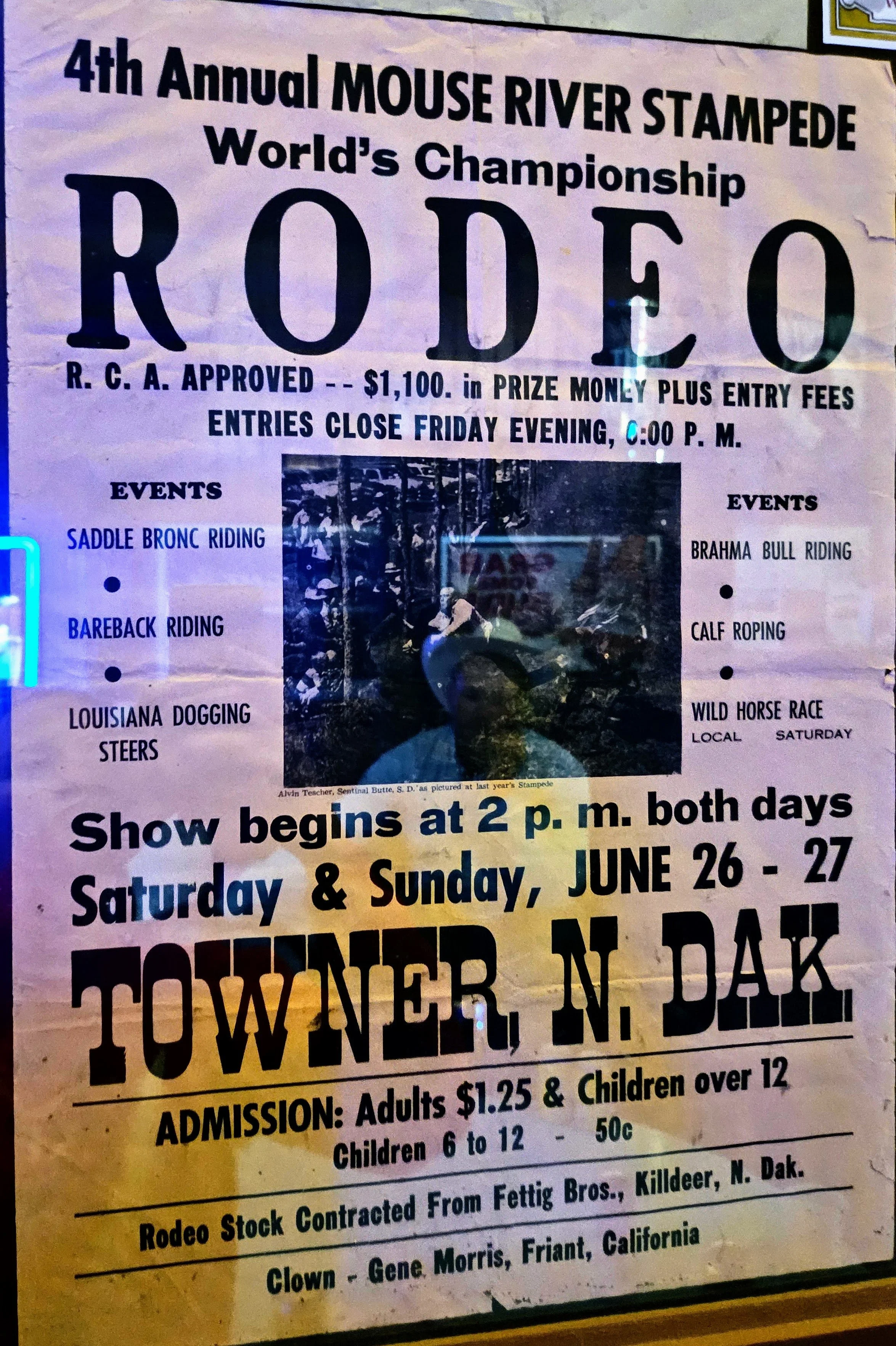
In 1953, the Stampede was a Rodeo Cowboys Association approved show and the prize money was $1,100. The event was then sponsored by the Ranchers & Farmers Horse Show Association who was a member of the North Dakota Rodeo Association. Brahma Bull riding was added to the two-day event and a Rodeo Bowery dance was included. Special entertainment was Jack Andrew’s trick mule and whip act as well as a clown and bullfighter from California who also had several trick animals.
The 4th annual Mouse River Stampede held on June 26 & 27, 1954 was an RCA approved show. In 1954, Fettig Brothers of Killdeer, ND became the first professional stock contractors for the Mouse River Stampede. Other events included a wild horse race and clown act by Gene Morris of Friant, California.
Rodeo dance was a big part during those days so a concrete dance floor had been built near the rodeo grounds and there were dances there on Friday and Saturday nights - June 25-26. Directors of the stampede group were H L Follman, president; Don Genre, vice pres; and Harvey Taylor, treas. Directors were William Swearson, Wendelin Bohn, Leonard Ellsworth, and Clifford Payne.
In 1955, the 5th Annual Stampede was held having only 2,000 attendance. There is no record of a Stampede in 1956 or 1957 in Towner. Rodeos were held at a ranch north of Towner by a different group and additional local rodeos were held at M.G. LaValley ranch near Granville, ND.
In 1958, Jim and Pat Dugan of Towner attempted to bring back the “Stampede” with a two-day event held in May. M.G. LaValley provided the stock. Ralph Kramer of Denbigh, ND was the rodeo clown. The rodeo office was set up in the lobby of the Towner Hotel on Main Street, Towner. In May of 1959, the Dugan boys again sponsored the 2nd Annual “New” Mouse River Stampede. Ricky Payne and Ricci Rosencrans from Towner won the Shetland Pony Race. During this era of rodeo, the stock contractors were from out of the area as were most of the contestants. It was hard for that local organization to stay out of the “red” so they folded up, but it didn’t stop Towner supporters from continuing on.
A new group of men decided to form an organization to host and promote rodeo. That group was the Towner Rodeo Association, which has organized yearly rodeos since and continues to be a strong entity.
-
Rodeo is a deep-rooted tradition for the Cattle Capital of North Dakota. The Towner Rodeo Association was established in 1960 and has been consistently hosting the annual July 4th Towner Rodeo for 66 years.
The Towner Rodeo and Parade is a big part of the celebrations held in the Towner and surrounding communities. For the families home for school reunions, family gatherings, local residents or tourists traveling through the area, the Towner 3rd & 4th rodeo and parade have become a staple. The rodeo heritage, the small-town friendly atmosphere, the cowboy persona and country wholesome life has everyone appreciating the lifestyle we have in North Dakota.
Towner Rodeo Association established in 1960.
The Towner Rodeo Association had their first meeting in January of 1960 and held the 1st Annual Rodeo on July 4th, 1960.
According to an article titled “10th Annual Rodeo” in the Mouse River Farmers Press on June 19, 1969, “It was during the winter months ten years ago, that a few local ranchers and farmers were in a local watering place, idly making conversation when one of them happened to mention the fact that it was a shame the rodeo grounds north of Towner weren’t being used. There had been rodeos there in prior years, but the promoters of the event found the attraction to be financially impractical and had abandoned the program. The men began batting the idea around and were soon joined by a few others, including some Towner businessmen. The more they talked the more they were convinced that the idea of a 4th of July rodeo, with local riders and volunteer labor, would provide an attraction which would not only be a good thing for the young riders of the area but would be a drawing card for rodeo fans. Right then and there the Towner Rodeo Association was formed.”
The original directors were: Raymond “Shorty” Thorson, Johnny Piatz, H.L. “Dutch” Follman, Walter Wolfe, Mickey O’Connell, Clem Hager, Frank Jaeger, William C. Swearson Sr., Pius Jaeger, Frank Heinrich, Adam P. Haman, Adam C. Haman, Lyle Jorgenson, Milton Ellis, Pete Johner, Homer Hill, and Earl “Erdie” Flowers.
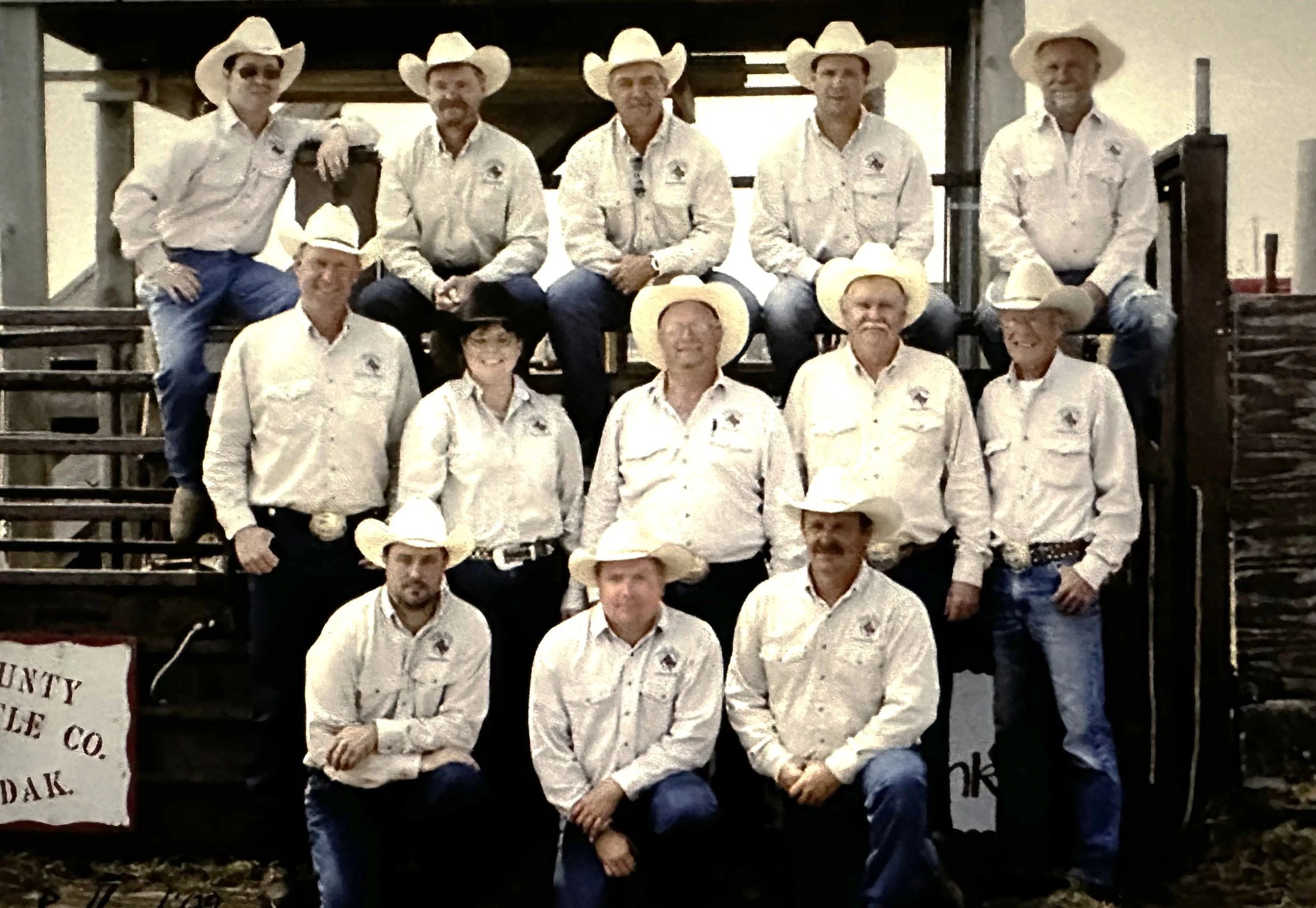
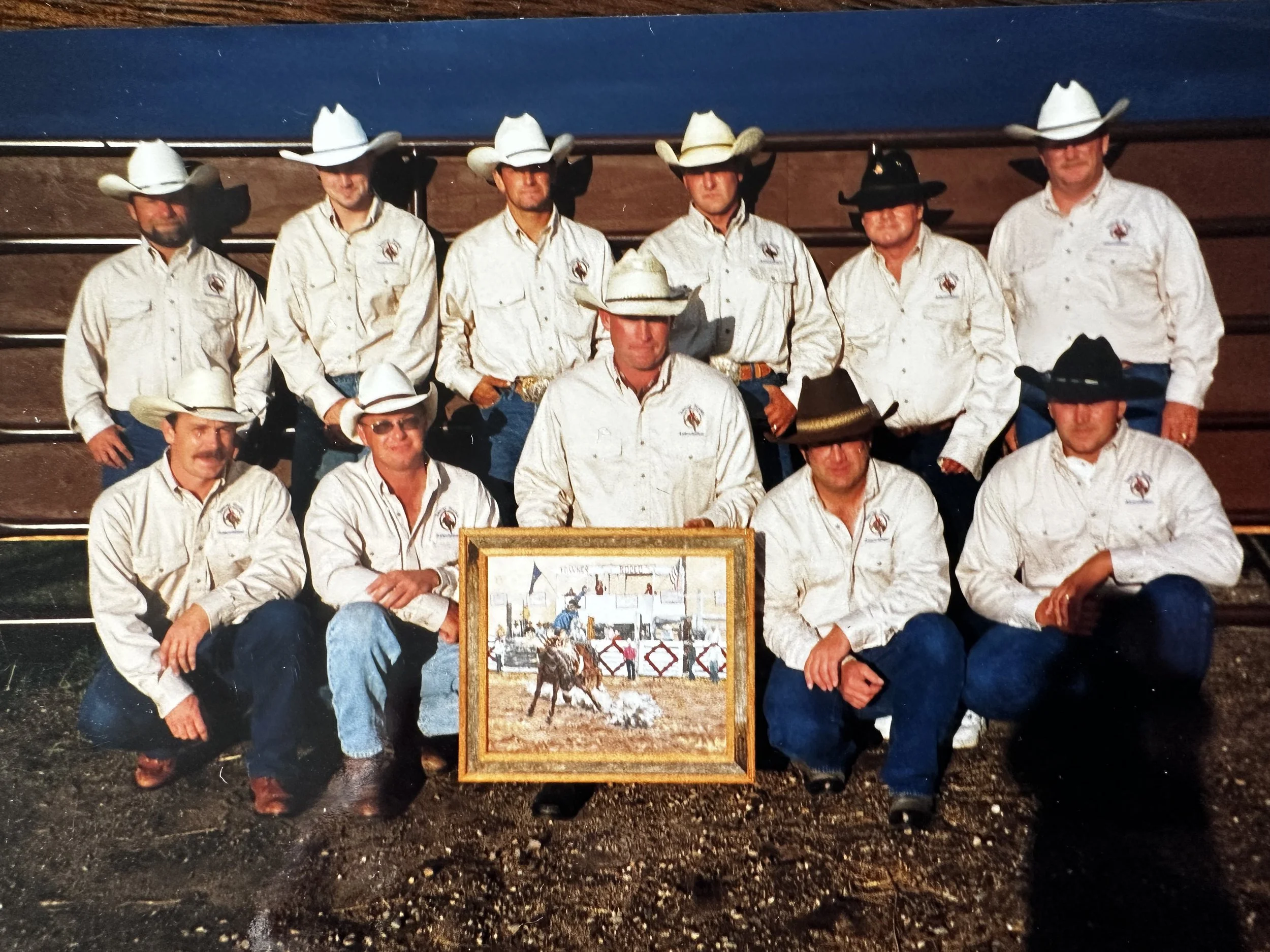
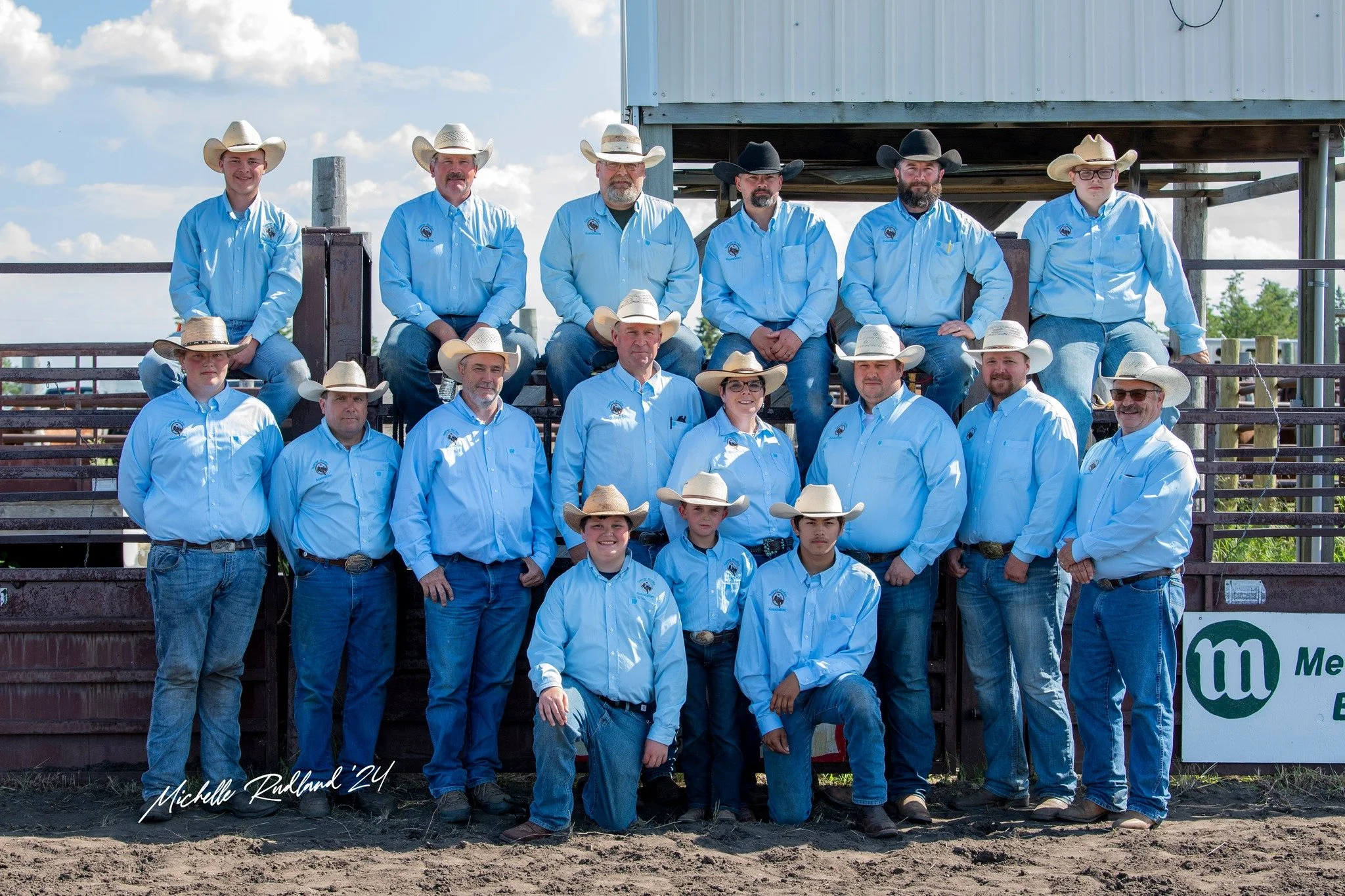
The current committee members are descendants or have been selected by retiring members to take their position on the board. To date, there have been over 60 directors on the board with some serving for only a couple years and some dedicating decades on the board.
Current Board Members include: David Drader, President; Sloane Jaeger, Vice President; Keith Medalen, Treasurer; Nikki Medalen, Secretary; and directors Matthew Drader, Stacey Jaeger, Bill Metzger, Dustin Jones, Todd Krout, Lane Marshall, Scott Stutrud, Steven Swearson, Bo Thorson, and Eddie Swartzentruber.
Dedication to rodeo has extended to the families of the members. Dustin Jones is 4th generation member, and Sloane Jaeger, Stacey Jaeger, Steven Swearson, and Bo Thorson are all 3rd generation members. Original members Johnny Piatz and Frank Jaeger served on the board for 35 years before retiring, and five of the current 14 members have each spent over 20 years on the board.
Past board members include: Scott Best, Harley Coss, Gerard Deibert, Brian Dokken, Ernest Dokken, Dave Follman, Roy Follman, Wally Fretland, Bob Gardner, Dwight Gunter, Arlen Haman, Bruce Haman, Gordon Haman, Jim Haman, Rick Haman, Cliff Hanretty, Larry Heinrich, Darwin Hjelmstad, Raymond Jaeger, Glenn Johnson, Chad Jones, Earl Jones, Jamie Jones, Terry Jones, Robert Kramer, Jeff Kuntz, Sonny Lehman, Michael McIntee, Dean Norris, Todd Olson, Larry Piatz, Paul Rosencrans, Billy Swearson Jr, Duane Swearson, Glen Thompson, Todd Toso, Francis Wolfe, and Jason Zahn. Honoring the past is important to the Rodeo Association as during the grand entry they recognize those members lost.
That first year of the rodeo the events included: saddle bronc riding, bareback riding, calf roping, wild cow race, barrel bending, boot race, girls cloverleaf race, wild cow milking, men’s relay race, and junior pony relay. Adult admission was 75 cents and children were free. A parade was held that morning. Free ice cream cones were given to the kiddos after the parade (500 served). When the Second Annual rodeo was held in 1961, Orrin Nelson from Towner won Saddle Bronc, 2nd in Bareback and 1st in Calf Roping. The prize money was $200 plus entry fees. At that time women’s events were restricted.
The rodeo grew quickly with 2,000 spectators at the 1962 rodeo. Concessions stands on the rodeo grounds were added. In those early years, events like ribbon dobbing, cow riding, stake bending, wild cow milking, and wild horse races were also held. Area businesses donated money for the “hard luck cowboy” and boots were donated by a local shoe store. In 1964, the prize money was $325.00 plus the entry fees. Admission was $1.00 for adults, 50 cents for students, and kids under 7 were free.
In 1966, two more of the old wooden chutes were added to the four that they had been using. The corrals behind the chutes were first installed by volunteer labor. In 1967 more than 4,000 viewed the rodeo; and team tying and ladies goat tying were introduced. In 1968, the Association constructed the large wooden bleachers on the west side of the arena that were in use until 2020. The arena was shortened and narrowed. In the mid-1960s, out-of-the-area cowboys arrived and left by airplane from the adjacent airstrip. Two commercial airplanes from Rugby and two from Towner shuttled riders from Towner to New Rockford and to Brush Lake so some of the cowboys took part in three rodeos on the same day.
In 1968, there was over 200 horses in the parade, therefore stock cars were banned. They also asked that no fireworks or motorcycles be around the parade route. The prize money was up to $800. Admission to the rodeo was $1.50 for adults and $0.75 for kids. There was a new VFW Hall built in Towner just in time to host the rodeo dance. In 1969, the pick up team was a husband-and-wife team from Montana. One of the stock contractors was Walter Piehl, Sr. of Marion, ND. Bull riding was added as an event.
It was a one-day rodeo for the first 20 years, but in 1980 they expanded it to a 2-day rodeo to accommodate the contestants that were entering multiple rodeos.
The Towner Rodeo Association has worked diligently to host a rodeo each year and doing it successfully with the help of sponsors and many volunteers from the area. The money is put back into the arena grounds, upkeep and expenses. The rodeo is consistently held on July 3rd and July 4th each year, regardless if it is a weekday. The slack is held in the morning of July 3rd along with an evening performance and another performance held on July 4th following the annual parade.
The only exception of not holding the rodeo on the 3rd and 4th of July, was in 2011 when the Mouse River (Souris) flooded and the bridges on both Hwy 2 and Hwy 14 were impassable. That year the Rodeo was postponed to July 23rd and 24th, 2011. It was a couple weeks late, but the Roughrider Rodeo was still a successful event. The flood didn’t stop the Towner Rodeo Association from having a rodeo on the 4th of July though. They organized a ranch rodeo with local teams competing on the 4th!
As the sport of rodeo grew across the state, so did the Towner Rodeo. During the 1990s and early 2000s Towner was a Roughrider Rodeo with many contestants, an example was a total of 448 entries in 2012. Most of the years though, it has been a North Dakota Rodeo Association rodeo. They have also been co-sanctioned by the Minnesota Rodeo Association and the Canadian Manitoba Rodeo Association.
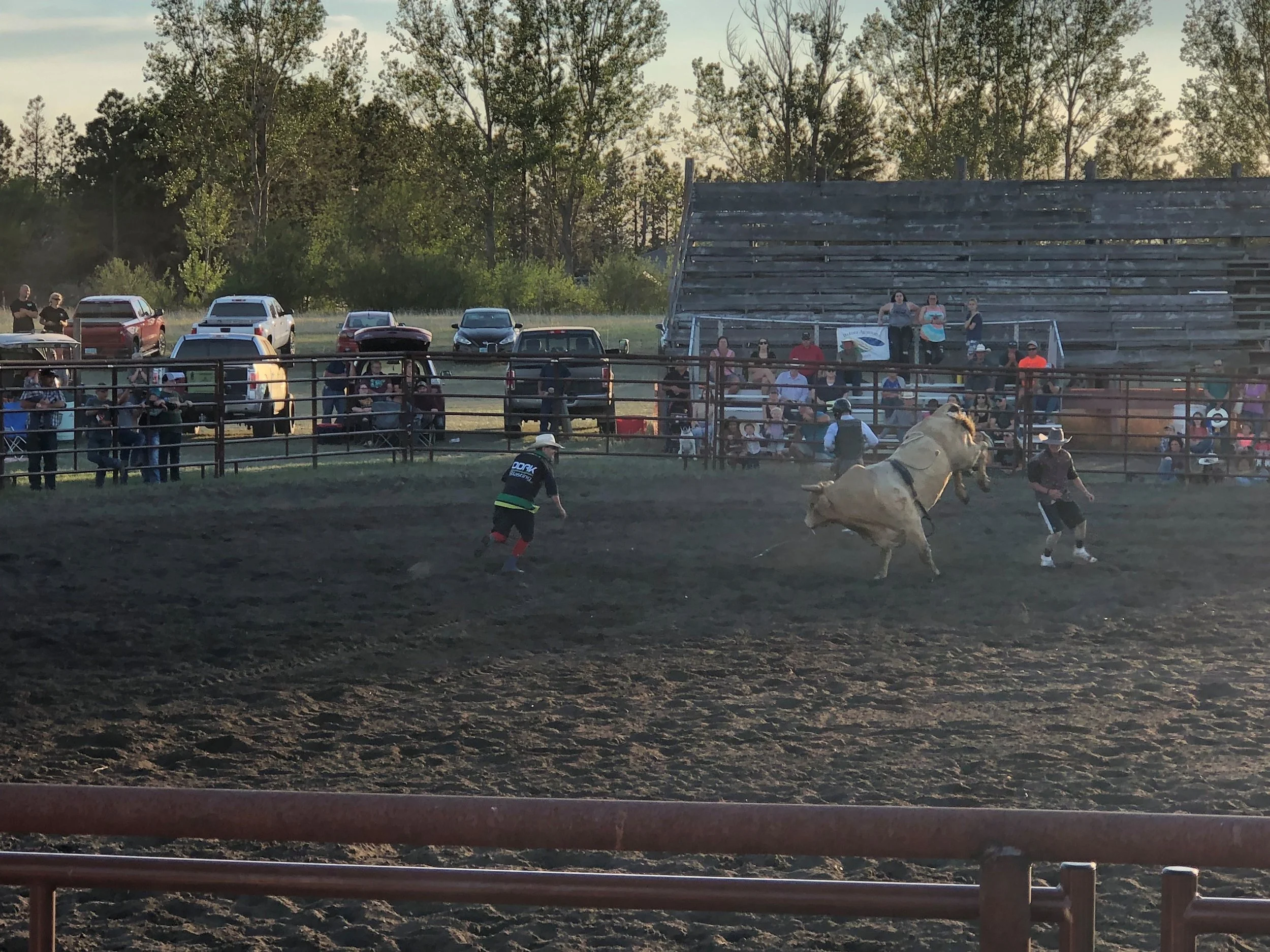
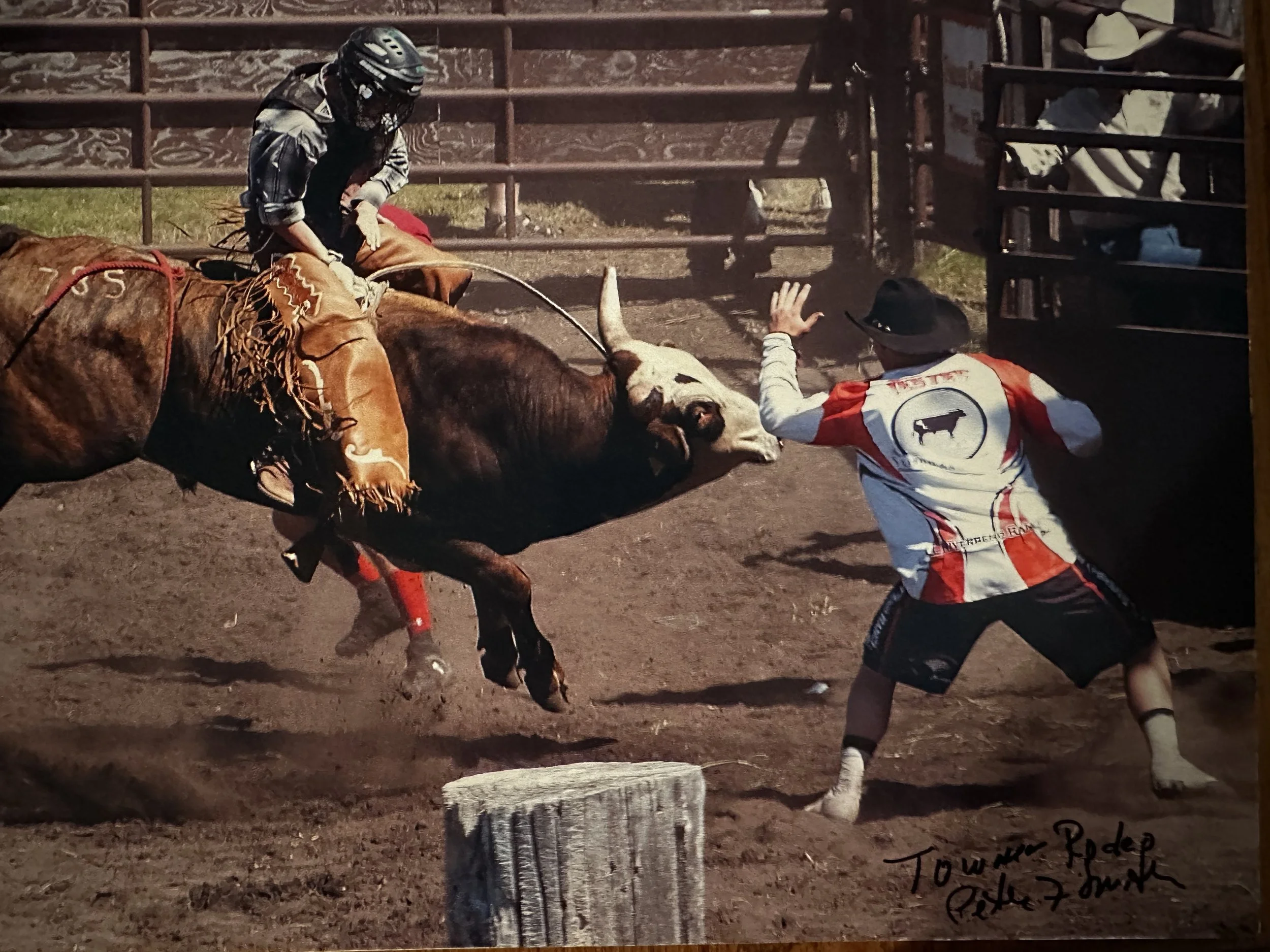
Over the years, they have only had two main stock contractors – Figure 4 Ranch and Abrahamson Rodeo Company. Many subcontractors have brought stock. The quality of stock contractors and contestants have been outstanding with well-known names in the rodeo business. In 1996, Al Sandvold was the bullfighter in Towner and did some free-style bull fighting for added entertainment. Professional bullfighter Nathan Jestes has also worked at the Towner rodeo protecting the cowboys.
What started as a local ranchers’ sport, is now pulling in contestants that also hold their Pro Rodeo Cowboys Association (PRCA) membership cards. Some contestants have the sport of rodeo in their blood and travel the state each weekend with their families to compete in this true western tradition. Today the Towner Rodeo is an NDRA rodeo and averages 250-300 contestants in the 2-day event with hundreds of spectators. The 2025 payout for the rodeo was over $26,000.
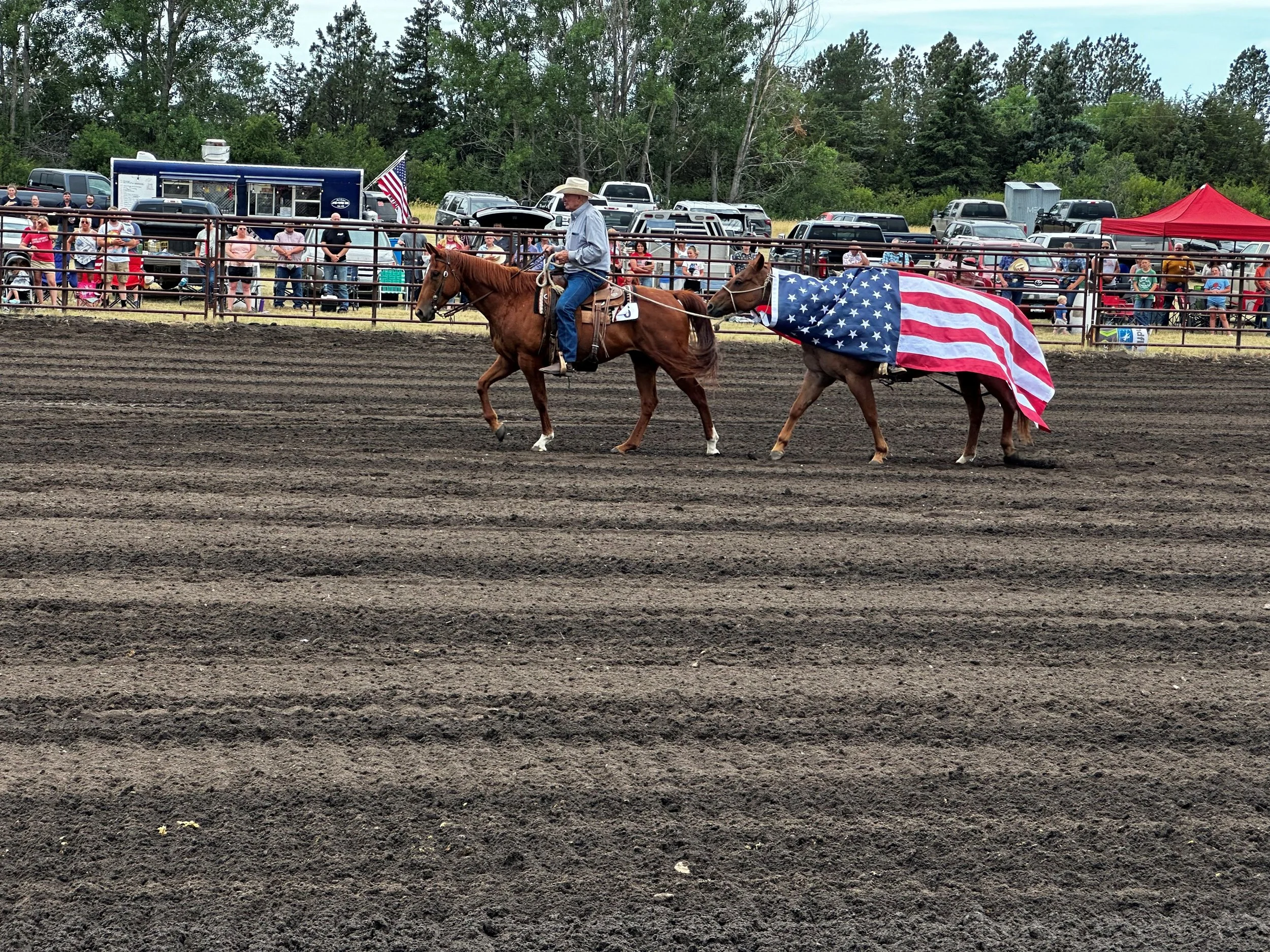
The many volunteers who have sang the national anthem, helped with the parade, been flag bearers at grand entry, donated their time and talents to building the arena, or worked during the rodeo in many capacities before and after the performances have made this rodeo possible. The Towner Rodeo Association is committed to promoting the sport of rodeo, living the western-way of life, and continuing the proud tradition of the Towner Rodeo for years to come.